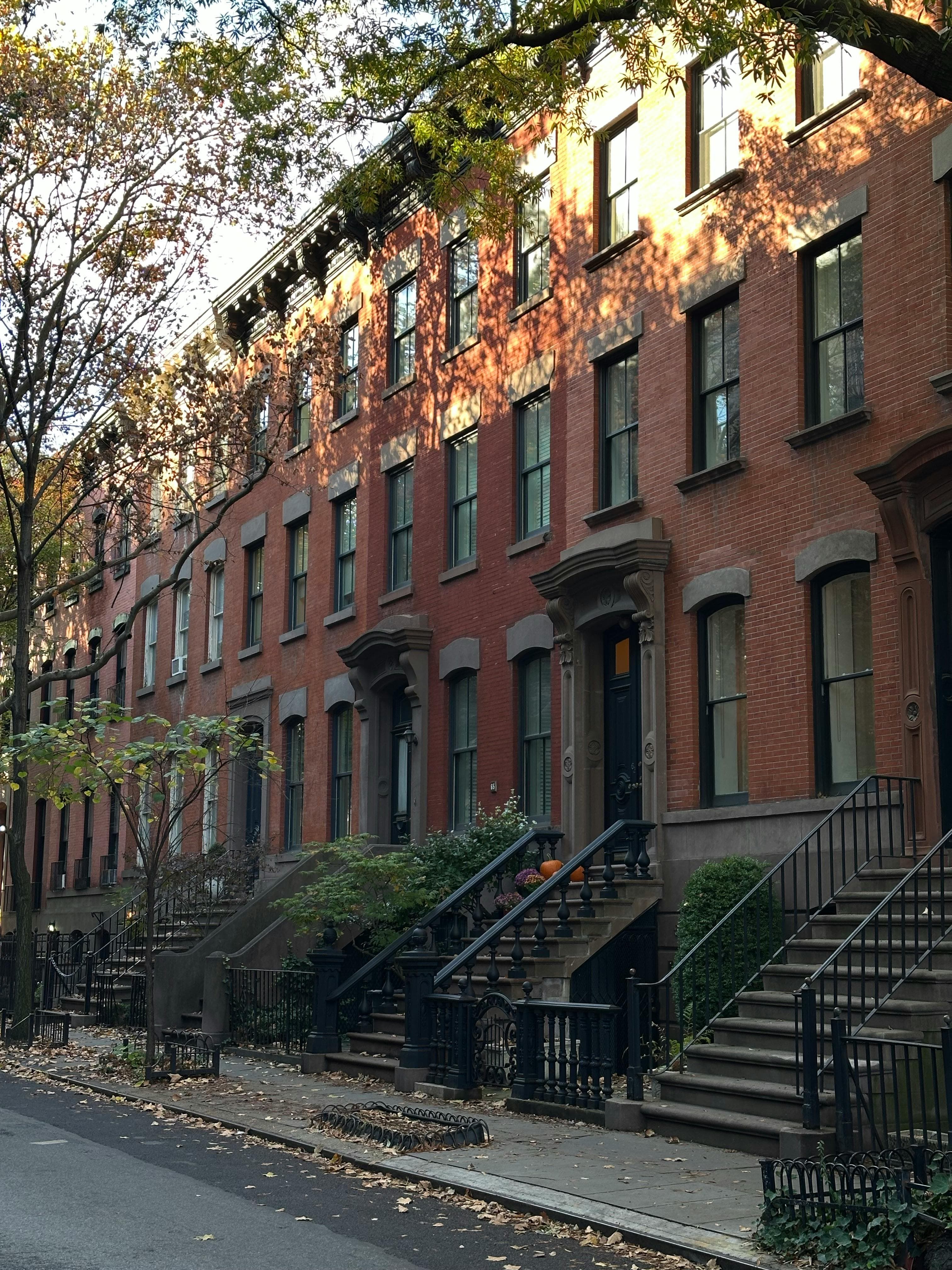
I live on a block in Harlem where I know almost everybody's face and almost nobody's name.
The parents two doors down have a son who is probably six. We say good morning. I have never asked for their phone number. I would not know what occasion would have produced that exchange. We have been doing the morning thing for over a year.
This is the part of my own life that started Nura, more than my sister in Texas, more than the spreadsheet I built for her pickup math, more than anything I have read about the cost of care in New York or the loneliness epidemic or the foundational workforce. The hello on the stoop. The neighbor whose kid I would absolutely watch for an hour, if she asked, and whose name I do not know.
I think about it every time I read another post about the village.
"We don't have a village"
If you read parenting forums for long enough, you notice that the most common complaint is not money, not sleep, not the toddler who only eats cheese sticks. It is the village. There is no village anymore. Grandmothers used to live next door. Neighbors used to drop in. Now it is just households on phones, paying sitters they barely know.
I believe parents when they say they do not have a village. I do not think they are wrong about the felt experience. But after a year of conversations and Reddit threads and hours sitting with the problem, I have started to think the diagnosis is off by one word.
It is not that the village is missing. It is that the protocol is.
The people are already there
Almost every working parent I have talked to in NYC can name three to five other parents in their kid's grade. They know who works from home. They know whose kid plays with whose. They wave at drop-off. They share a class WhatsApp where logistics get coordinated in short bursts.
They also do not text any of those parents when something breaks.
The mother I talked to in Brooklyn last month, both she and her husband working until five, can name four other moms in her daughter's class. She has never texted any of them. She was not out of people. She was out of protocol.
The mom in the New York suburb whose standing playdate turned into the quiet ledger had the village. The ledger is what happens when a village exists but does not have a shared agreement about how asks and offers move through it. The accounting is the symptom. The missing protocol is the cause.
When researchers write about social capital and dormant ties, they often note that the power of those ties is, well, dormant. The people are in your life. The connections exist. They are not being moved by anything. The word researchers use is activation. The word parents use is the village.
What a protocol actually is
A protocol is not a feeling. It is not a friendship. It is not the warm sense that you and Sarah from drop-off would, in some abstract universe, be there for each other.
A protocol is the small handful of explicit rules that lets a group of parents move help around without any single ask being a load-bearing emotional event.
A carpool rotation is a protocol. We swap pickups Tuesday and Thursday is a protocol. If your kid is sick before 8am, text me, I will reply within ten minutes is a protocol. Wednesday after school my daughter is at yours, Friday yours is at mine is a protocol.
None of these are friendships. They are agreements. They turn the question of whether to ask into something already decided, in calmer conditions, by both people. The system is happening. The ask is not.
This is what parents with a real village have built. Not just relationships. Quiet operating agreements, made early and lightly, with people they did not have to love.
Why the protocol doesn't form on its own
Most parents will never propose a protocol out loud.
They will not text the mom from drop-off and say would you want to set up a standing pickup swap on Wednesdays. That sentence feels enormous. It feels like asking somebody on a date. It feels like a binding contract on a relationship that does not even have a name yet.
So the protocol does not form. The hello on the stoop stays the hello on the stoop. The favor, when it eventually has to be asked for, gets routed through the ledger instead, because that is what parents fall back to when nothing was set up in advance.
The thing that is missing from the village is not the people. It is the neutral ground where two parents who already see each other can quietly agree to a small structural arrangement, without the conversation feeling intense, without anyone proposing what sounds like a friendship, without the word commitment doing the work.
Where Nura fits
I am not building Nura because parents need more people. They have the people. They have my morning neighbors. They have Sarah from drop-off. They have the four moms in the class WhatsApp.
I am building Nura because they need the protocol. The small layer of structure that lets the relationships they already have do the work those relationships could do, if anyone had ever set them up to.
When the Brooklyn mom told me she had never texted any of the four moms in the class, she was telling me what most parents in this city already know. The block is full. The school is full. The morning is full. The protocol is not.
The village is not gone. It is on your block. We are building the part that wakes it up.