1
Decide what help you can offer
You do not need to have your person yet. Start by getting clear on what you can offer and what you need. When the timing feels right, your plan is ready to share.
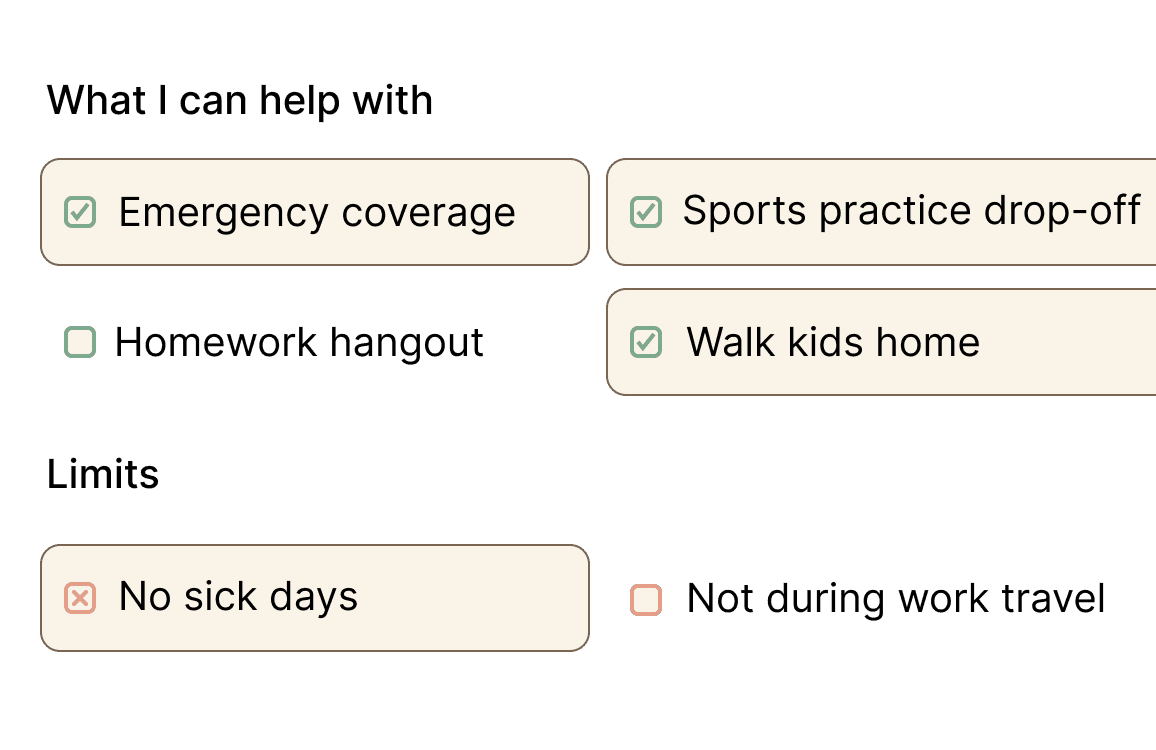
HOW IT WORKS
You decide what you can offer. You start with one parent you already know. Together, you make the possible ask specific enough to answer before anything urgent comes up.
1
You do not need to have your person yet. Start by getting clear on what you can offer and what you need. When the timing feels right, your plan is ready to share.
2
The hardest part isn’t finding someone. It’s making the next step specific enough for them to answer honestly.
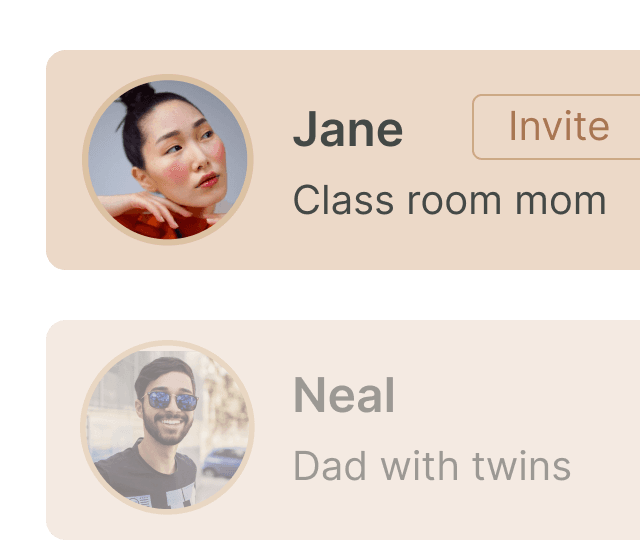
3
Not a vague maybe someday. A clearer starting point both of you can say yes or no to before anything urgent.
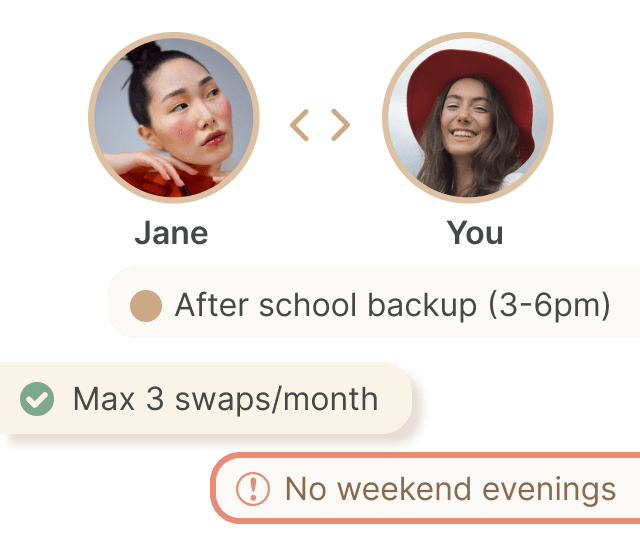
4
When something comes up, you are not starting from zero: the timing, the person, and the possible ask are already clearer.
Start your planFree to start. Shape the plan now; decide when you are ready to use it.
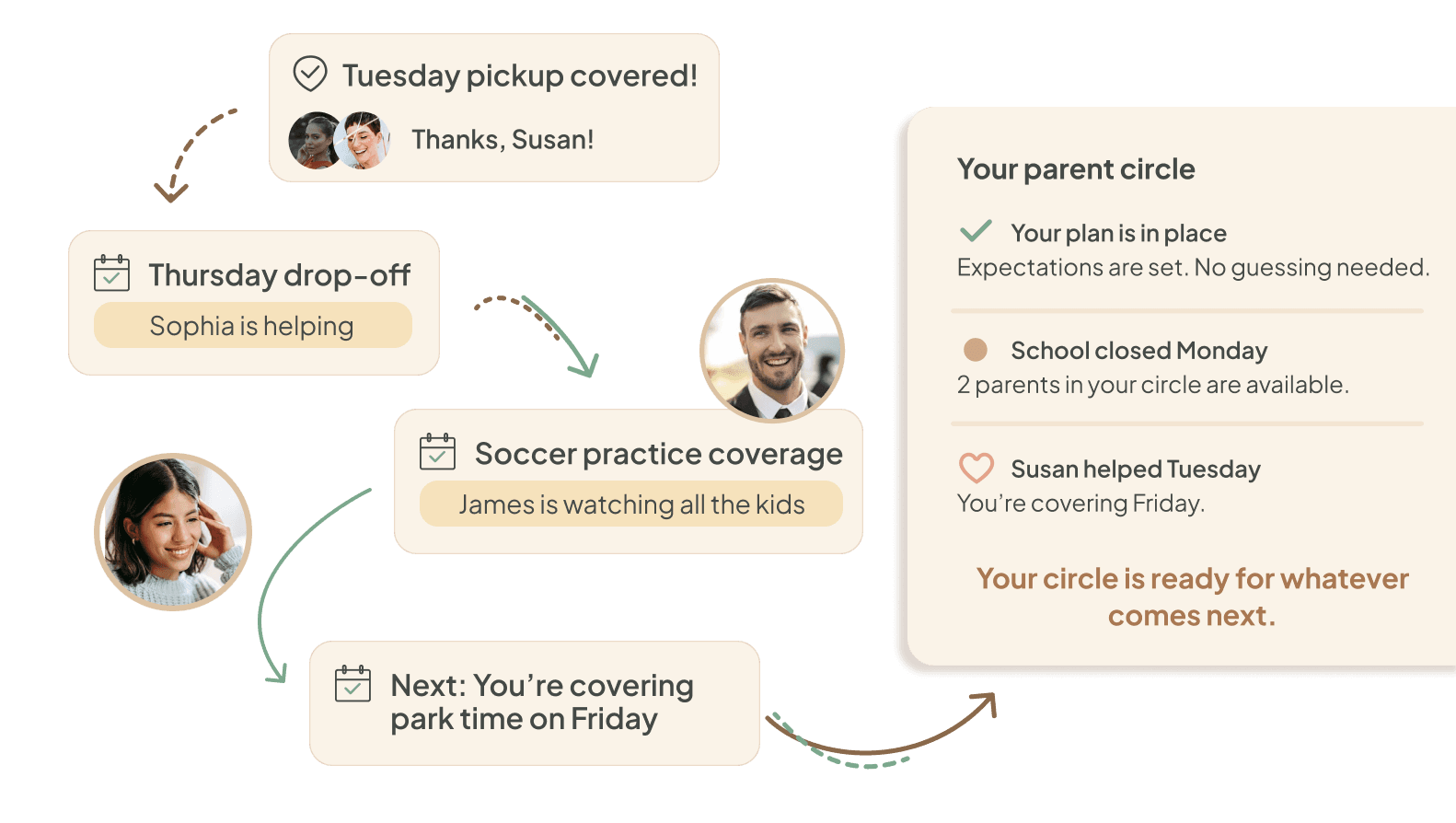
When something comes up
School closing early today
Pickup at 12:45
After-school pickups might work
A few swaps a month could be okay
Sick days need a separate check
It’s a clear starting point, not a guarantee.
Who can help

You don't need every family figured out. One repeated routine and one familiar parent are enough to start.
Start with one routine After-school pickups might work